
By Dario Doshin Girolami

Studies confirm that stress can rapidly lower the levels of CD4 T lymphocytes, the white blood cells that orchestrate the immune response to infections but that succumb to the ravages of HIV. What effect, then, might follow a reduction of stress through the practice of meditation? A study recently conducted at the Center of Psychoneuroimmunology at UCLA has demonstrated that such a practice can indeed measurably reduce stress and slow down the progression of HIV. The regular exercise of meditation, it implies, can be a powerful complementary treatment for HIV when used in conjunction with medical treatments.
Over the years, mindfulness-based meditation has found a space in treatment programs in institutions such as hospitals, prisons, and schools, for its preventive and rehabilitative clinical potential, and in various other organizations, for confronting many of the physical and psychological problems associated with stress and illness.
Most people who have completed a course of meditation report a perceptible and lasting reduction in stress and other physical and psychological symptoms; they also report an increased ability to relax, greater ability to interact with others in stressful situations of short or long duration, increased energy and desire to live, higher self-esteem, and a reduction in levels of pain.
Knowing about these beneficial effects, I approached the Dì Gay Project Association (DGP) with a proposal for a course in meditation for seropositive people, which would provide basic instruction in Right Mindfulness practice. The method was based on techniques developed at the Maitri Hospice of San Francisco, the first Buddhist hospice in the world for supporting people affected by HIV/AIDS. The objective of the course was to reduce the stress felt by the participants and to bring them to a deep and liberating acceptance of their illness.
Buddha has been called the Great Doctor. He defined the Four Noble Truths—the truths of suffering, of the origin of suffering, of freedom from suffering, and of the Way that leads to this liberation. In this, he was following the model of Indian doctors of the period, who would identify a sickness, the origin of the sickness, and the possibility of a cure for the sickness.
The Second Noble Truth, in particular, teaches that the origin of suffering lies in attachment. More specifically, Buddha taught that reality is impermanent. Everything is in a state of constant change: what is born, dies. Nothing is eternal. Since human beings develop attachments to things and to people, and delude themselves that these things and people will last forever, when things change or people die, or relationships end, suffering arises. In the same way, health too is impermanent and can change into sickness.
But Buddha also defined old age, sickness, and death as “heavenly messengers,” because these events can make us more mindful of impermanence.
The practice of meditation has a lot to do with mindfulness and, in particular, with mindfulness of impermanence, starting with the observation of the impermanence of breath—a practice that is also fundamental for calming the mind and for making it possible to observe one’s own fears from a clearer perspective.
A person’s reaction to being diagnosed with something like HIV is often one of fear: fear of the pain that the disease will bring and/or of medications that will cause pain, fear of being abandoned or isolated, fear of losing one’s self—that is, of becoming different from the person one knows—and fear of death. It is therefore essential to work with all these fears in the practice of meditation, including the fear of the unknown.
But what separation is there, in fact, between health and sickness? It is our mind that tells us: “Health is good, I like it, I want it – I don’t like being sick, I don’t want it.” This constitutes duality. It is one thing to have preferences (in this case, for health), and another to separate oneself dualistically from one’s own life when it shows itself to be unhealthy.
Meditation leads us to accept the reality of our lives, to accept impermanence. And impermanence means that health changes into sickness. So, can we succeed in being happy in this state of impermanence? Reality is impermanent—to wish otherwise is simply delusion. The Way consists of opening one’s eyes and seeing reality as impermanent; the Way consists of developing a happiness that includes everything, not one that is selective—otherwise it is not the happiness that Buddha was talking about. If we can develop an inclusive view of life, which welcomes light and shadow, health and sickness, youth and old age, life and death, this then is the true happiness, and we develop along with it compassion for all beings.
Shunryu Suzuki Roshi, the Zen master who founded the school that I belong to, died of cancer at the age of 67. In one of his last teachings, he said: “We may think that the purpose of meditation is to make ourselves physically strong or to make ourselves mentally healthy or strong. But healthy mind is not just ‘healthy mind’ in its usual sense, and weak body is not weak body in its usual sense.” Then he said, “Even though I die, with me it is all right. That is Buddha.” Then he added, “We should be very grateful to have a limited body.”
What does it mean to say we should be grateful to have a limited body? We delude ourselves that everything is permanent, but reality tells us constantly that everything is impermanent, starting with our own bodies. That is life. There is winter, there is autumn, there is old age, there is death, there is sickness. To hope that it might be otherwise is to create suffering. That is the truth. Either we manage to embrace life as it is or we will live in a constant state of frustration, constant suffering.
A meditation practice that liberates us from attachment to what is impermanent has to be undertaken very patiently. The word for “patience” in Sanskrit is kshanti, a term that can also be translated as inclusivity. Suzuki Roshi in fact was speaking of a happiness that was capable of including everything, including impermanence and sickness. So the road to follow is one of patience that accepts everything. The point is to accept reality completely, to be inclusive and not separating in one’s approach—to develop an open, luminous, and joyful patience.
In Anguttara Nikaya 4.113, the Patoda sutta, Buddha explains that there are four kinds of horses: the horse that starts to run when it sees the shadow of the whip; the horse that starts to run when it feels the whip touch the hair on its skin; the one that starts to run when it feels the whip in its flesh; and the one that runs only when it feels the whip in its bones, in its marrow.
The sutta goes on to explain that a person who hears that someone in another village is about to die and who begins to reflect on the transient nature of life is like the first horse, which runs when it sees the shadow of the whip. The person who hears that someone in his own village is about to die and who begins then to reflect on the transient nature of life is like the horse that runs when it feels the whip touch the hair on its skin. The person who hears that someone in his family is about to die and who begins to reflect on the transient nature of life is like the horse that runs when it feels the whip in its flesh. Finally, the person who hears that he himself is about to die and who begins to reflect on the transient nature of life is like the horse that runs when it feels the whip in its bones.
Commenting on this story, Zenkei Blanche Hartman—my first teacher and the first abbess of the San Francisco Zen Center—said, “Impermanence is the whip,” and told the story of how she came to have a heart attack—that is, how she had to see impermanence from very close up in order to understand that life is a gift. The whip had to reach her bones: she was in hospital and on the point of death. She was saved by a miracle, but the even greater miracle was that she understood that every single moment is a gift that must not be wasted.
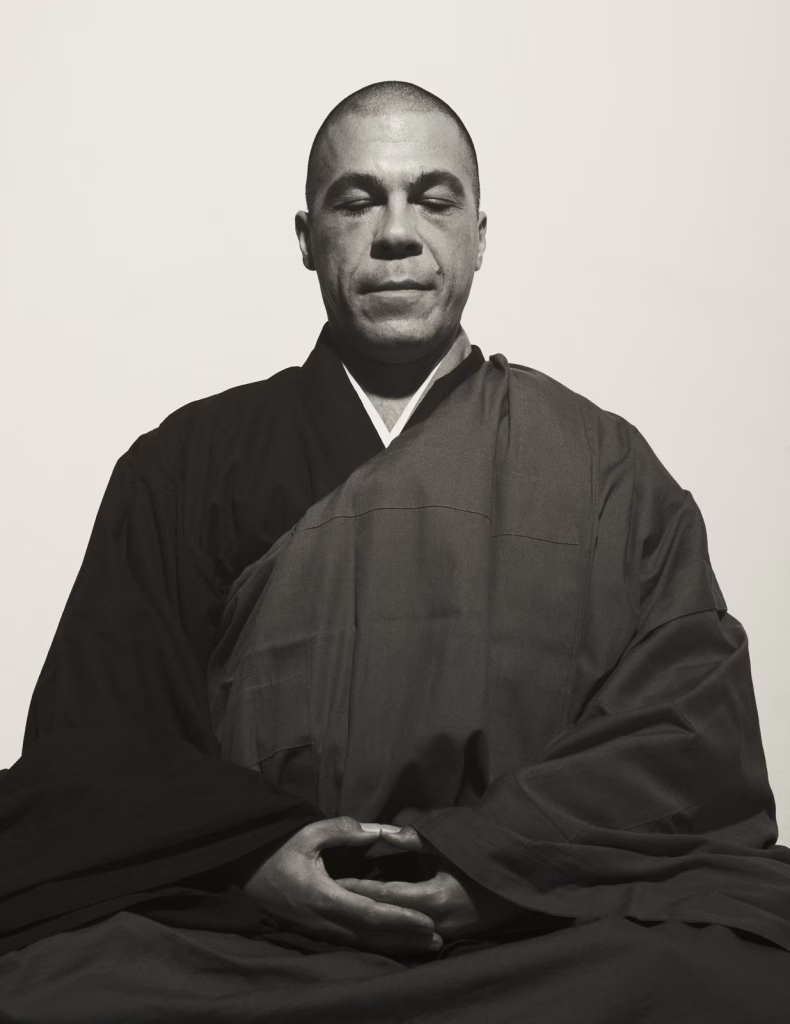
Which type of horse are we? What kind of prompt do we need in order to start practicing the Dharma—the teaching of Buddha—or to undertake a spiritual practice, or to confront our life? Does it take just the shadow of a prompt or do we need to feel a blow? Or must the sting reach right down to the bone?
Which type of horse would we like to be? What kind of stimulus do we need? Do we really want to be the kind of horse that needs to feel the pain in its bones? Why do we need such a strong and deep pain in order to wake up? What sort of thing is this whip that Buddha talks about?
Today, more than two-thirds of the people diagnosed as seropositive survive a long time, thanks to the current therapies. Even so, the word “AIDS” is associated, in the minds of patients, with a premature death: a whip that can lead to depression, anxiety, and stress, which only make one’s health worse.
But the pain and fear generated by a significant diagnosis, if met and examined effectively, can generate powerful insights and lead to a deeper emotional and existential maturity. They can open a person not only to the truth of impermanence and the vulnerability of existence but also to compassion and the awareness of the interdependence of everything that exists.
At the start of the meditation sessions with HIV-positive people, what I heard from participants, in implicit and explicit ways, was “I don’t want to die!” Their hearts seemed to be tied up in a tight knot all the time. They seemed to be generating a one-note, persistent “No, no, no, no.”
But once they had been introduced to meditation practice, to the teachings of impermanence, to the story about the horses, the participants began to sit in meditation with great seriousness, with great effort and a sense of urgency. Gradually, that original “No, no” was transformed into a “Yes, yes.” The participants had learned to embrace fear and to recognize themselves in the virus—no longer seen as the enemy, but as themselves. Learning—thanks to meditation—to be one with the reality of the present moment, in meeting after meeting, they had learned to be one with the illness and all the experiences that came with it, with all the emotions.
Buddha teaches that we are all interrelated and interconnected with one another. It has been an honor and privilege for me to witness how the course participants, having recognized that their suffering was equal to that of their fellow participants, opened themselves to compassion and interdependence.
But there is more. Thanks to this practice, the participants recognized the fact that they were HIV-positive as a “mindfulness bell” that had brought them back to the present moment; they also arrived at a deeper and more authentic understanding of their own selves. It was as if they had passed from a life of negation and make-believe to a life that was more real and authentic, much closer to the real Self.
When I talk about the meditation classes I lead in prison, I am inundated with questions, given the ever-present topicality of prisons. When I talk about the meditation class for parents who have lost a child, I notice that my listeners are disturbed, but no-one asks questions, perhaps because the thought of losing a child is unbearable. When I talk about meditation for HIV-positive people, I see no reaction at all, and the conversation stops immediately. Why?
Perhaps because AIDS is a social blind spot, a black hole in our collective vision: something that we do not wish to see because it is too uncomfortable or too associated with the idea of sin. But the problem of AIDS concerns us all and is far from being resolved. In fact, because it is no longer talked about in the media, young people believe that the virus has been defeated and do not take the necessary precautions. I noticed, with pain, that the age of the course participants was low. Young men of 18, 20 years old, ignorant—until a short while ago—of the virus’s presence.
One of the aims of the course was to turn the attention of society at large to the continuing problem of HIV/AIDS, to not set the problem aside and leave HIV-positive people or their families or the medical facilities that serve them to struggle on their own.
This article first appeared in EBU Magazine #2 – Buddhism in European Society (2019). Download the full issue as PDF or browse all issues.